
How to Organize a Messy Room: Step-by-Step Reset
Walking into a cluttered room triggers immediate decision fatigue and mental tension. When every flat surface is buried under clothes, paperwork, and miscellaneous items, figuring out where to start feels impossible. Learning how to organize a messy room requires a systematic micro-habit framework that eliminates visual overwhelm without exhausting your energy.
To organize a messy room quickly, follow a sequential five-stage reset: discard visible trash, clear dirty dishes, collect all misplaced laundry onto a made bed, sort remaining loose items into categorized sorting bins, and assign fixed physical anchor zones for every retained item.
Key Takeaways
- What it is: A structured, five-stage physical decluttering method designed to remove decision fatigue from room organization.
- Why it works: Clearing high-volume surface items first restores immediate visual floor space and reduces cognitive overload.
- Quick Start: Grab a single garbage bag and remove all obvious trash and recyclables in a single 5-minute pass.
The Science of Visual Chaos (Why Clutter Drains Your Energy)
Visual disorder is not just an aesthetic frustration; it directly taxes your brain’s processing capacity. When your environment is packed with unorganized objects, your visual cortex must constantly filter competing stimuli, impairing focus and raising background stress levels.
A landmark study published in the Journal of Personality and Social Psychology (Saxbe & Repetti, 2010) demonstrated that individuals who perceived their home environments as cluttered or full of unfinished projects exhibited flatter, unhealthy cortisol slopes throughout the day. Chronic visual disorganization keeps the nervous system in an elevated state of alert.
Understanding the psychological meaning behind domestic disarray helps replace guilt with productive momentum. If you frequently find yourself avoiding household organization, understanding the messy room meaning can provide helpful psychological clarity before you begin.
How to Organize a Messy Room in 5 Manageable Steps
To avoid burnout, execute these five phases sequentially. Do not move to the next step until the current category is completely off surfaces and floors.
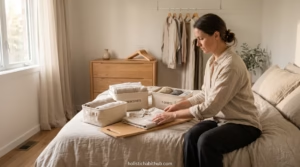
Step 1: Execute the Trash and Dishes Surface Sweep (10 Minutes)
Start with zero-decision items. Walk the room perimeter with a heavy-duty trash bag and remove wrapper remnants, packaging, empty bottles, and scrap paper.
Next, gather all water glasses, mugs, and rogue snack bowls in a single wash basin and carry them directly into the kitchen sink. Stripping bio-waste and dirty dishes immediately freshens the room and eliminates visual noise.
Step 2: Establish the Bed as Your Neutral Sorting Island
Never leave your bed unmade while sorting loose objects. Pull the sheets taut, smooth out your comforter, and straighten the pillows to create a clean, elevated staging area.
Making the bed creates a clean, flat surface to hold sorting boxes while simultaneously anchoring the room visually. A made bed represents up to 40% of the visual space in a standard bedroom, delivering immediate psychological relief.
Step 3: Collect and Categorize All Fabrics
Fabric clutter creates the greatest amount of visual volume on bedroom floors and chairs. Scoop up every textile in the room and place it directly onto your made bed for rapid triaging.
Sort these items into two clear piles: dirty clothes straight into laundry hampers, and clean garments straight onto hangers. Getting textiles off the carpet restores walking paths and exposes the true footprint of the room.
Step 4: Use the 3-Box Method for Loose Objects
Bring three plastic bins or cardboard boxes into the room and label them: Keep in Room, Relocate Elsewhere, and Donate/Sell.
Pick up loose knickknacks, charging cables, documents, and books one by one, sorting them rapidly without pausing to overthink. Once completed, carry the “Relocate Elsewhere” box outside the doorway immediately to remove it from your immediate field of vision.
Step 5: Give Every Item a Fixed Physical Anchor
Clutter reappears when objects lack designated physical homes. Designate specific zones: daily electronics on nightstand trays, grooming tools inside dedicated drawer dividers, and reading material stacked neatly on shelves.
Once every item is returned to its anchor point, finish by vacuuming the open carpet or sweeping bare floors. Completing a full floor sweep seals the physical reset and reinforces a clean baseline, just like our daily guide to keep your room clean.
Daily Habit Anchors to Keep the Room Clean
Sustaining an organized room requires micro-habits rather than massive weekly overhauls. Pair small organizing actions with habits you already perform daily:
- Morning Anchor: After your feet hit the floor to turn off your alarm → pull your comforter and straighten your pillows immediately.
- Entryway Anchor: When stepping into the bedroom after work → hang worn jackets on hooks and drop dirty laundry directly into a lidded hamper.
- Nighttime Anchor: After plugging in your smartphone for sleep → spend 90 seconds returning stray cups and nightstand items to their designated stations.
Frequently Asked Questions About Organizing a Messy Room
Where do I start when a room is completely overwhelming?
Start exclusively with non-emotional, zero-decision items: trash and recyclables. Grabbing a trash bag and collecting obvious garbage requires no complex categorization, instantly reducing visual chaos and building low-friction momentum.
How long does it realistically take to organize a messy room?
An average bedroom reset takes between 45 and 90 minutes when you use the five-step sequential method. Focusing on one category at a time prevents pacing between corners and keeps the total duration predictable.
How do I stop my room from becoming messy again?
Prevent future clutter by establishing dedicated anchor points for everyday items and implementing a two-minute nightly reset. When every object has an exact drawer or tray, returning it takes seconds rather than becoming an all-day chore.
Final Thoughts
Organizing a messy room is not about achieving architectural perfection or pristine minimalism. By leaning on sequential resets and small daily habit anchors, you transform your room into a restorative sanctuary that actively protects your mental clarity.