

Introduction
Feeling overwhelmed rarely comes from one big problem — it comes from dozens of small tasks piling up until your day feels out of control. Micro habits are the antidote. These tiny actions take less than a minute but create structure, reduce stress, and help you feel more capable in your daily routine.
One of the most effective micro habits I use is checking both my work and home calendars before I commit to anything. It sounds simple, but it consistently prevents chaos. It pairs perfectly with the idea of setting small obtainable goals, because it breaks the day into manageable pieces instead of letting everything blur together.
What Are Micro Habits?
Micro habits are tiny actions that keep your day organized without draining your energy. They’re small enough to repeat every day, but powerful enough to build structure around your life.
They work because they remove friction. Instead of relying on motivation, you rely on a predictable pattern — the same principle behind creating a solid daily rhythm, something I explored in The Importance of Routine.
Micro habits turn chaos into something you can control.
The Micro Habit That Changed My Day
Every morning and evening, I check two calendars:
-
My work calendar
-
My home/family calendar
This micro habit takes less than 30 seconds, but it sets the tone for everything else.
A quick personal example
Before scheduling a work meeting, I always check if there’s a doctor’s appointment on the home calendar. And when I book a doctor’s appointment, I check my work calendar first. This tiny habit prevents double-booking and avoids unnecessary fights between my wife and me. It’s a small action that protects the bigger priorities in my life.
Why This Micro Habit Reduces Overwhelm
When you know what’s ahead, your brain stops spinning. Micro habits like checking your calendar work because they remove uncertainty — and uncertainty is one of the biggest sources of stress.
1. You avoid double-booking
A quick calendar check eliminates scheduling mistakes before they happen. This micro habit keeps your day organized so you’re not scrambling to fix overlapping meetings or appointments. Avoiding double-booking also protects your energy, because you’re not wasting time rearranging commitments or apologizing for missed events. It’s a small action that creates a smoother, more predictable day.
2. You prevent family–work conflicts
One of the biggest stressors for busy people is the friction between personal responsibilities and work demands. This micro habit solves that instantly. By checking both calendars, you catch conflicts before they escalate — things like doctor’s appointments, school events, or unexpected meetings. A 10-second review prevents problems that often take hours of stress, frustration, or relationship tension to repair.
3. You start the day with clarity
Overwhelm grows when you don’t know what the day looks like. When you start with a quick calendar review, your brain immediately shifts from reactive mode to proactive mode. This micro habit gives you a clear picture of your priorities, making it easier to manage your time and stay calm. Clarity improves focus, reduces decision fatigue, and makes the whole day feel more manageable.
4. You make better decisions
It’s easy to say “yes” to too much when you don’t have a full view of your schedule. By seeing your entire day at a glance, you make decisions with context. This micro habit helps you avoid overcommitting, respect your limits, and set realistic expectations for yourself. Better decisions compound over time, leading to less stress and more productivity.
5. You feel more in control
A predictable day feels less stressful than a chaotic one. When you consistently check your calendars, you build a sense of control over your time — and control is one of the strongest antidotes to anxiety. This micro habit reinforces the belief that you can manage your responsibilities without feeling overwhelmed. Even when life gets busy, you stay grounded because you know what’s coming.
How to Build This Micro Habit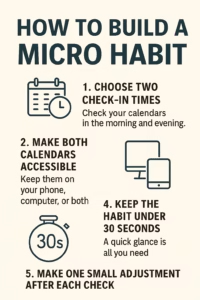
1. Choose two check-in times
Pick one time in the morning and one time in the evening so it becomes automatic.
-
Morning: before opening emails
-
Evening: before shutting down for the night
A consistent schedule makes the micro habit effortless.
2. Make both calendars instantly accessible
The fewer taps or clicks, the better. Options include:
-
A widget on your phone
-
Two pinned tabs on your computer
-
A shared Google Calendar synced with your work Outlook calendar
If it’s easy to open, you’ll do it every day.
3. Attach the habit to something you already do
Micro habits stick when they’re tied to a routine you never skip.
-
Check while your coffee brews
-
Check right before brushing your teeth
You’re leveraging an existing pattern, not building a new one.
4. Keep the habit under 30 seconds
Anything longer becomes optional.
A quick glance is all you need to prevent stress later.
The power comes from repetition, not duration.
5. Make one small adjustment after each check
Don’t just look at the calendar — use the information.
Examples:
-
Move a meeting that clashes
-
Block 15 minutes for a priority task
-
Prepare for tomorrow’s appointment
Small adjustments compound into big time savings.
Conclusion
Micro habits are small, but they solve big problems. Checking your calendars each day reduces stress, prevents conflict, and creates a sense of control in a busy life.
If you’re overwhelmed or stretched thin, start here. It’s simple, practical, and it works — and it’s the foundation for bigger changes like building small obtainable goals and establishing a reliable routine that keeps life running smoothly. For an extra boost, consider using a simple daily planner or desk calendar to keep everything visible and organized at a glance.